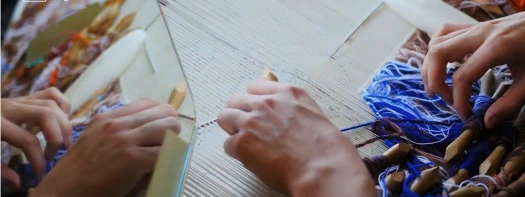
The AXA Foundation for Human Progress is Partnering with UNESCO and the Journal Nature to Launch the “A New Generation of Scientists” Campaign
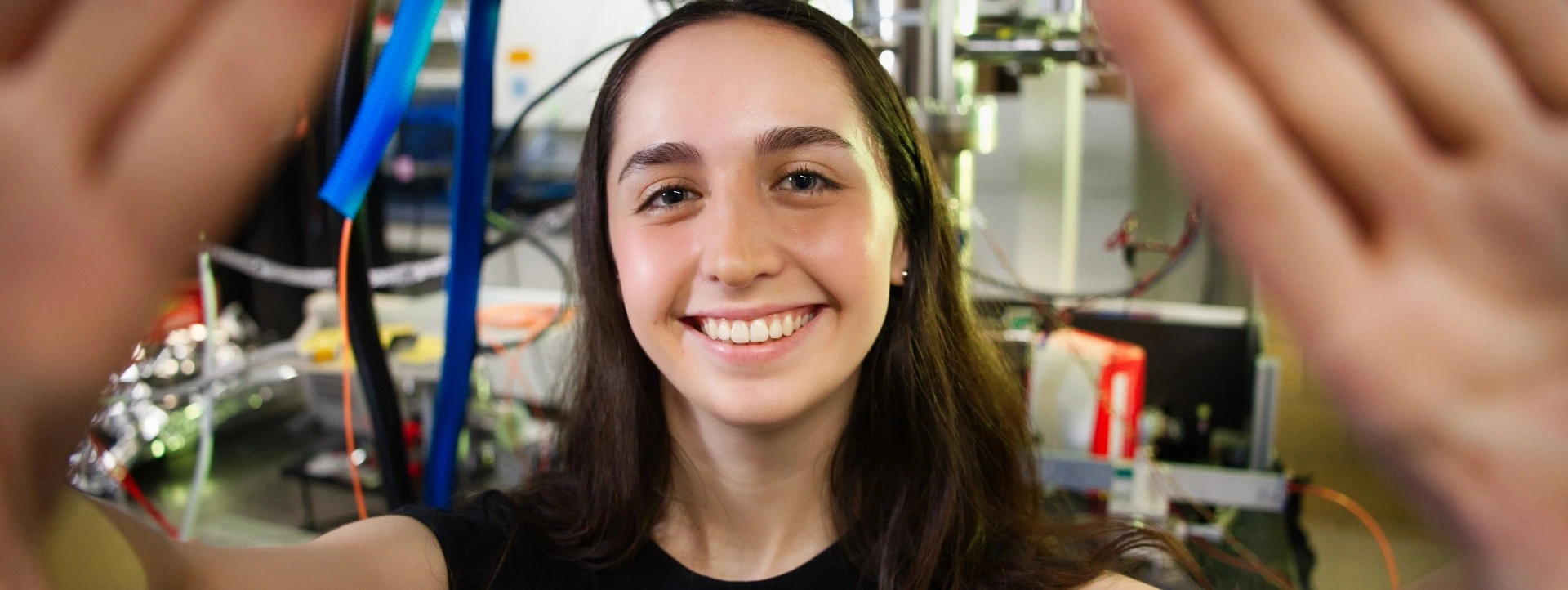 © Brian Slanger
 In the face of global climate, health, and social crises, a new generation of researchers is emerging. Born in the era of digital transformation, they are redefining the bounds of research, bringing a collaborative, interdisciplinary, and deeply committed vision - as well as a sense of urgency.
At a time when science is questioned and challenged, the AXA Foundation for Human Progress reaffirms its conviction: science plays a vital role in understanding the world and building a more just and resilient society. With misinformation on the rise, it is essential to defending the truth. With environmental crises and growing inequalities we urgently need to rethink our social models: science must guide action now more than ever.
This conviction drives the launch of “A New Generation of Scientists”: a traveling exhibition and a multi-platform campaign (TikTok, YouTube, Instagram), co-produced with UNESCO and supported by a partnership with the prestigious scientific journal Nature.
“A New Generation of Scientists” marks the launch of New Gen, the AXA Foundation for Human Progress’s new program. Dedicated to the younger generation of researchers, New Gen aims to provide long-term support for innovative, independent, and transdisciplinary science in order to tackle the major challenges in health, climate, and society. The program celebrates and supports a community of bold young researchers committed to shaping the future of scientific research through their work.
Choosing Science: Choosing to Be a Force for Change
“A New Generation of Scientists” is a strategic advocacy and influence initiative centered on profiles of young scientists aged 18 to 35 from every continent. They are all engaged changemakers working at the intersection of science, sustainability, and environmental stewardship. They all position science as a pathway to impact, purpose, and action.
The campaign speaks directly to young people at a pivotal moment in their educational and career choices. It reminds them that becoming a researcher means believing that understanding the world is the first step to changing it; It means choosing to be a vital source of energy, innovation, and hope for society and people as a whole; it means dedicating yourself not merely to a career, but to a cause.
Accompanying the launch are words from Jane Goodall, United Nations Messenger of Peace:
You cannot get through a single day without having an impact on the world around you. What you do makes a difference, and you have to decide what kind of difference you want to make.
A Generation Speaking to its Own Generation
Beyond showcasing their fascinating journeys, “A New Generation of Scientists” aims to build a bridge between these brilliant researchers and young people by highlighting teamwork and a shared commitment to putting open, multidisciplinary science at the crossroads of tomorrow’s challenges and for the common good.
The 2026 exhibition features 11 portraits and will be expanded with new portraits in 2027, and again in 2028. The disciplines - ranging from classrooms dedicated to STEM to materials science laboratories, and even the most remote corners of our planet - highlight the fundamental values of inclusion, the transmission of Indigenous knowledge, and gender equality.
Through the New Gen program and this major international traveling campaign - in partnership with UNESCO and Nature - the AXA Foundation for Human Progress reaffirms its ambition: the resilience of societies and the reduction of inequalities, today and for future generations. By offering these eleven young researchers a platform that matches their talent, the Foundation is empowering a new generation to shape the future of research with courage, clarity, and determination.
This project aligns with UNESCO’s mission to build peace through international cooperation in the fields of education, science, culture, and communication. It places the new generation of scientists at the heart of the International Decade of Science for Sustainable Development (2024–2033), proclaimed by the United Nations General Assembly.
The prestigious scientific journal Nature is joining the campaign as a media partner, offering its editorial authority and global network to amplify the voice of this new generation among researchers, policymakers, and young audiences worldwide.
Discover the Journeys of Young Researchers Who Have Made Science Their Mission - and Tell Yourself: “There’s a Place for Me in Science.”
Science thrives on thendiversity of backgrounds, cultures and disciplines. There are multiple pathways to contribute and make a difference: over the last thirty years, digital technologies have transformed the practice of science and introduced new skills and new careers.
Through captivating photo stories and genuine testimonials, young researchers from around the world share their motivations, aspirations and commitments.
Meet the architects of a resilient science who are working for the benefit of future generations.
The unveiling of “A New Generation of Scientists” took place on July 15, 2026, at the UNESCO House. The exhibition will be on display on the gates at UNESCO's in Paris until September 30, 2026. It will then embark on an international tour, with Belgium as its next stop.
.jpeg)
Eleven Portraits, One Shared Conviction: Science Will Save the World
“The key is to be driven by your curiosity, always asking questions.”
Emma Vogel, 32 (USA/Norway), postdoctoral researcher at the Arctic Sustainability Lab, University of Tromsø, studying how marine top predators’ movements and behaviours are shaped by prey fields and environmental factors and how whale species interact with local fisheries; Laureate of the Nature photo contest Scientists at Work 2025.
“The world needs science!”
Chloé Dindault, 32 (France), AXA Research Fund postdoctoral fellow, working on organic agrivoltaics at the IMS Bordeaux Lab - Bordeaux INP, CNRS, and the University of Bordeaux and conducting research on innovative manufacturing processes for new photovoltaic panel materials.

“Science helps you to not have biases, to critique everything in each way possible and to question everything.”
Dev Karan, 18 (India), founder of Pondora, a youth‑led initiative revitalizing neglected village ponds through community partnerships, ongoing maintenance, and low‑cost water‑quality monitoring. UN Young Activist Laureate 2025.

“Science became my thing when I learned of other areas that I could be curious of and that I could involve more people in something I love.”
Elisa Torres Durney, 22 (Chile), social entrepreneur, pursuing her bachelor’s degree at Duke University, USA, founder of Girls in Quantum, expanding access to quantum education for girls and young women.
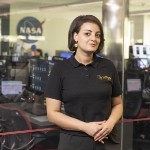
“Part of my mission is to make sure that the next girl who looks up at the sky doesn’t have to wonder if science is for her.”
Meriem El Yajouri, 32 (Morocco), first Moroccan woman to join the prestigious NASA’s Space Telescope Science Institute (STScI) in Baltimore (the Hubble and the James Webb Space Telescopes) focusing on diffuse interstellar bands and interstellar matter.

“Young scientist: they are the future.”
Vusiliye Moyo, 38 (Zimbabwe), postdoctoral Research Fellow at ACDI, University of Cape Town, working on the Heat Adaptation Benefits for Vulnerable Groups in Africa (HABVIA) dedicated to heat adaptation in sub-Saharan Africa (SSA).
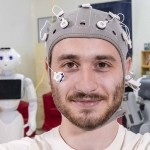
“Science taught me something important: saying I don’t know is not a mistake or a weakness, it is the starting point of something interesting.”
Nadim Saleem, 25 (Syria/France), fled Syria at age 18; PhD student at ISAE‑SUPAERO and LAAS‑CNRS in Toulouse (France), he is now conducting research in brain–computer interfaces (BCI) and human–robot interaction (HRI).

“Science brings hope to the world and a lot of fun to your own self.”
Ndaudika Mulundineli, 35 (Namibia), received the UNESCO Al‑Fozan International Prize for the Promotion of Youth in STEM, co‑founder of the Mindsinaction STEAM Centre, introducing Namibian children to STEM education through hands‑on learning.
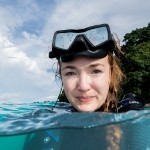
“Science is the best way to give a direct voice to nature.”
Callie Veelenturf, 33 (USA/Panama), marine conservation biologist, founder of Leatherback Project dedicated to protect leatherback turtles in Panama connecting Indigenous communities with government agencies.

“Science gives you the power to turn knowledge into change.”
Azaria Pickering, 30 (Fidji), an ocean monitoring and technical officer at the Pacific Community (SPC), monitoring ocean acidification across the Pacific Islands, a critical issue for marine biodiversity.

“Science allows to understand this world and to shape its future. It is very cool and important.”
Yan Zhong, 32 (China), postdoctoral researcher at C-CIA Group, University of Geneva, Switzerland, studying climate change-related natural catastrophes risks in the Hindu Kush–Himalaya (HKH) region.
The New Gen program now takes shape through three initiatives, in health, science & society, and nature – the third led through our own call for proposals for young researchers on responsible nature-based solutions. Find out more about New Gen.
Keep reading