Thanks to the support of the AXA Foundation for Human Progress, a collection of letters from the private archives of Charles de Gaulle is now accessible to the general public.
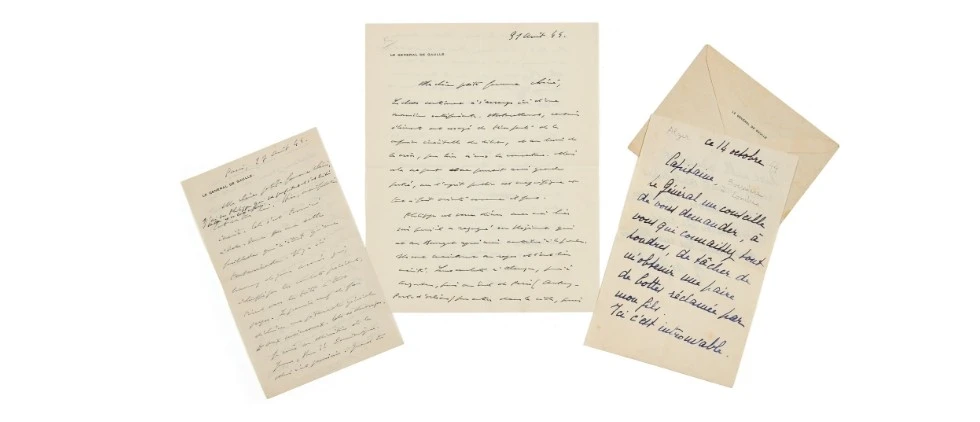
A major partner of the National Archives of France (Archives nationales) for over ten years, AXA made this acquisition possible at the exceptional sale "De Gaulle. Une succession pour l'histoire" (De Gaulle, Legacy for History) organized by Artcurial in Paris in December 2024. These handwritten letters have now entered the shared national heritage.
This patronage is part of the commitment of AXA Foundation for Human Progress, which brings together the main philanthropic actions of the AXA Group and the AXA Mutuelles d'Assurances. One of the Foundation’s Arts, Culture and Heritage pillar’s missions is to safeguard collective memory - a cornerstone of social cohesion and of a society's ability to narrate its own history.
From Private Archives to Collective Heritage
In March 2024, Admiral Philippe de Gaulle, the general’s eldest son, passed away. His death raised an urgent question: What would become of the collection of the General's family archives - his letters to his mother, his wife, and those closest to him?
The answer took shape a few months later. On 16 December 2024, the personal archives of General de Gaulle were put up for auction at Artcurial, Paris.
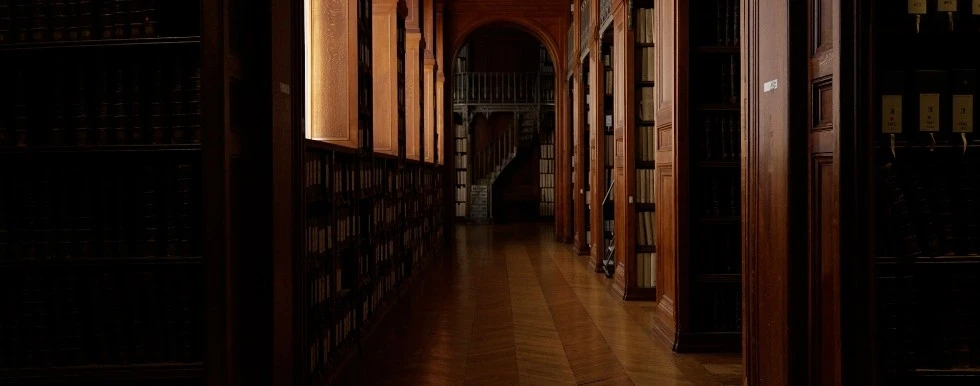
In preparation for the sale, France’s major public institutions for conservation and research* cooperated to ensure each document would go to the institution best suited to preserve and promote it. Indeed, as early as the 1950s, Charles de Gaulle had himself planned a sensible distribution of his papers: his literary writings and Memoirs to the National Library of France (Bibliothèque Nationale de France) and his official state papers - held in that capacity as public records -, along with the private documents offering insight into them, to the National Archives.
The acquisitions made at the December 2024 sale honour these broad intentions, and AXA’s philanthropic support has enabled these significant documents to join the national public collections, where they are now preserved, studied and accessible to all.

We are proud to have contributed, alongside the National Archives, to this acquisition of unique handwritten archives belonging to General de Gaulle - one of the most illustrious figures in history -, thereby helping enrich France’s national heritage. Supporting the entrance of this collection into the institution that preserves France’s memory, and contributing to the public’s historical knowledge, resonates deeply with our values.
Thomas Buberl Chairman of the AXA Foundation for Human Progress, CEO of AXA
History in the First Person
This remarkable historical and memorial legacy acquired by the National Archives spans more than half a century, from 1914 to 1970. The portion supported by AXA Foundation's patronage covers the period 1936–1970 and comprises 31 lots - 93 documents in total, including 87 letters written by Charles de Gaulle to those close to him and six letters addressed to the General.
It is an intimate and continuous correspondence that runs through the entire adult life of Charles de Gaulle. Among the letters : those written to his mother, Jeanne - some written from German prisoner-of-war camps (Ingolstadt, Wülzburg, Rosenberg) during WWI, to his father Henri (in 1915 and 1929), to his wife, Yvonne, during the fighting in May-June 1940 and the years of exile in London, and to his son, Philippe, a naval officer, up until 1970.
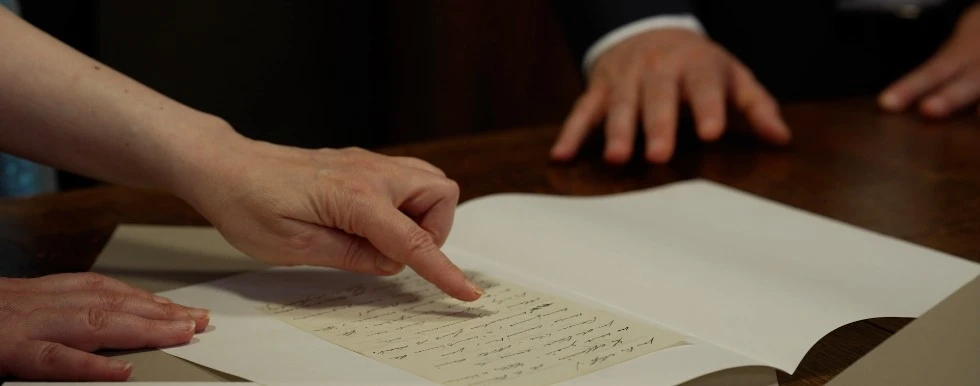
A number of pieces of political or institutional correspondence complement these: a letter to the Spanish ambassador in Berlin (1918), a letter on Hitler and Mein Kampf (1936), letters from Pétain, Reynaud, Juin, Koenig and Herriot addressed to De Gaulle. They reveal the breadth of his networks and concerns in an early century marked by wars, crises, and reconstruction.
The Man Behind the Statesman
These letters gradually reveal the figure of the statesman, aware of the burden of power and true to the path he has set for himself. In October 1940, as leader of Free France, he wrote to his wife from Douala (Cameroon): “The task is weighty, both in practical and moral terms. One must accept - and I do accept - all the consequences of this tragedy, in which events have made me one of the principal actors.”
These letters are a precious resource for researchers, history enthusiasts, and teachers, and a powerful educational tool for any citizen curious about their political heritage. They offer younger generations a unique opportunity to understand, in De Gaulle’s own words, what it means to act for one’s country in a world marked by uncertainty. A sound democracy rests on every citizen’s access to their History.
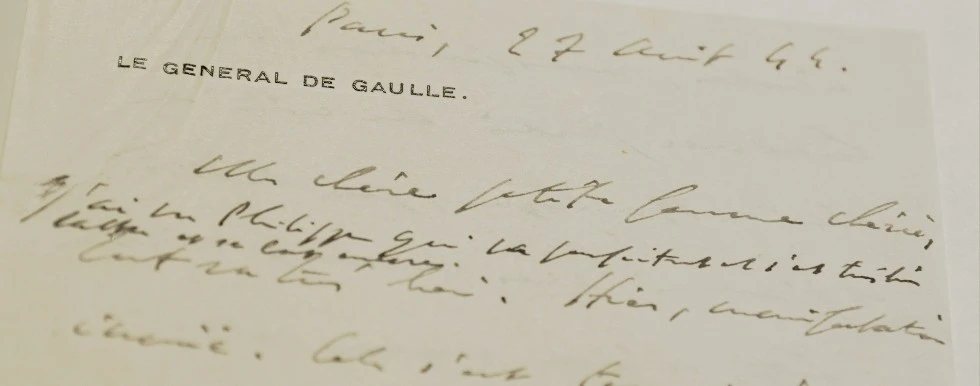
Without this mobilization, some of these items might have left the country or disappeared into inaccessible collections—an irreparable loss to our cultural heritage. For the National Archives, the support of sponsors such as AXA has been crucial.
Protecting Memory to Prepare for the Future
As guardians of the nation’s memory, the National Archives purpose is to make such documents accessible. Once admitted to their collections, these archives become material for research, education and civic life.
For the AXA Foundation, supporting this acquisition means more than preserving historical heritage. It is a contribution to transmission of knowledge, civic education and the duty of remembrance. Made accessible to all, these archives become a common good: they nourish shared knowledge, strengthen the bonds between generations and contribute to the democratic vitality of our society.
Protecting a people's memory is also a way of protecting individuals. Protecting the long term is fully in line with AXA's mission as an insurer and its purpose: “Acting for human progress by protecting what matters.”

In an increasingly complex world, fostering civic education is an imperative — and a key ambition of the AXA Foundation for Human Progress. After 40 years of philanthropy led by the AXA Group and the AXA Mutuelles d’assurances, the AXA Foundation was created to take this ambition further, systemically and at scale. Human progress is fueled by the arts, culture and heritage. These are drivers of dialogue and social cohesion. They help strengthen the long-term resilience of our societies.
Clément Rouxel General Delegate of the AXA Foundation for Human Progress
*The National Archives of France, the National Library of France (BnF), the Historical Service of Defense, the Departmental Archives of Nord, the Army Museum, the Museum of the Order of Liberation et the Museum of the Legion of Honor and the Orders of Chivalry
Exhibition « From the private archives of general de Gaulle to the Appeal of June 18 »
From June 16 to June 18, 2026
To mark the anniversary of the Appeal of June 18, AXA presented, within the setting of its Paris headquarters, a collection of letters from General de Gaulle to those close to him, between 1936 and 1944. These letters were acquired by the National Archives with the support of AXA at the Artcurial sale of December 2024.
As part of an exceptional loan, the original manuscript of the Appeal of June 18, 1940, held by the National Archives and not covered by AXA's, was also on display.
General de Gaulle's Private Letters: A Unique Record for Heritage and Memory
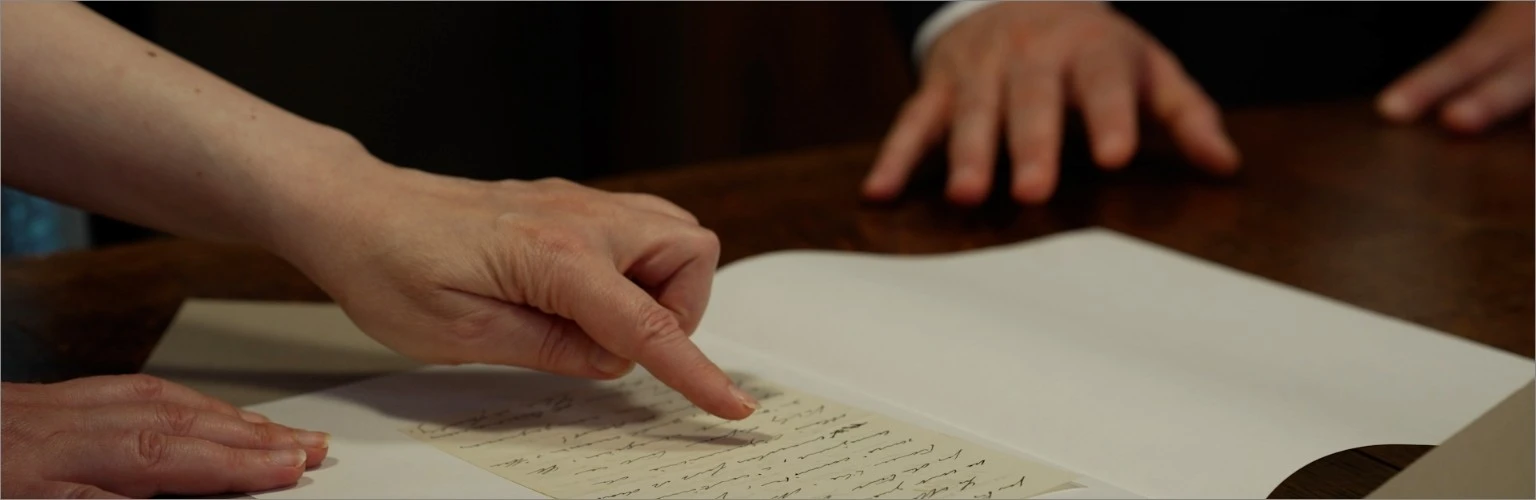
The exhibition allowed visitors to discover several handwritten letters addressed to his loved ones, written in a flowing, elongated, slightly slanted hand. To his mother in 1936. To his wife Yvonne during the decisive hours of May and June 1940, as France was collapsing under the German offensive. To his son Philippe, in the midst of the war. This correspondence bear witness, often with sobriety and restraint, to his reflections and concerns, but also to his determination in the most critical moments.
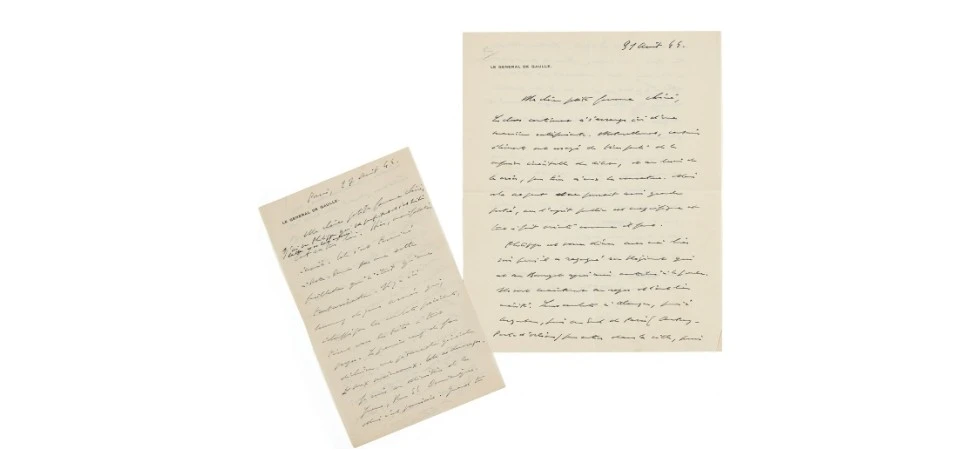
These documents reveal what history books rarely provide: an encounter with the man behind the historical figure - a husband, a father, a son, and one of the most decisive figures in contemporary history.
The exhibition paid tribute to that founding moment in French history that is the Appeal of June 18, while reminding us that memory has meaning only when it remains a shared asset for all.
Preserving the Memory of General de Gaulle for Future Generations
To many, Charles de Gaulle is a voice from the past. And yet, in his time, he was not speaking about the past - but about what did not yet exist: the future.
Born in Lille on November 22, 1890, Charles de Gaulle was trained as an officer at Saint-Cyr. He encountered war in the terrible trenches of 1914–1918, where he was wounded several times and taken prisoner. During the interwar period, he published works on armored warfare that established him as a pioneer of mechanized battle. In June 1940, amid the collapse, he joined the government as Under-Secretary of State for War and National Defense. While Marshal Pétain asked the Germans to end hostilities on June 17, 1940, the next day, Charles de Gaulle broadcast from London on the BBC his « Appeal of June 18 » to refuse defeat and continue the fight - the founding act of Free France. He led Free France, the French Committee of National Liberation and the Provisional Government of the French Republic until 1946.
Recalled to power in 1958 as prime minister, at the height of the Algerian crisis, he oversaw the establishment of the Fifth Republic and became its first president. He reformed the institutions, brought the Algerian War to an end, guided decolonization, and pursued a policy of national independence - including a nuclear deterrent and France's withdrawal from NATO's integrated command structure - while advancing his own vision of European integration, from the Franco-German partnership to vetoing the United Kingdom's entry into the European Economic Community. Following the defeat of the April 1969 referendum, he stepped down from office. He died at Colombey-les-Deux-Églises on November 9 ,1970. A figure of authority, but also a thinker on social justice, he leaves the image of a statesman who believed that a country's greatness is measured by its ability to remain master of its own destiny, even in a world in crisis.
His enduring legacy lies in both his actions and in a unique way of thinking about social justice, sovereignty and protecting the most vulnerable. De Gaulle believed in progress, but warned early on against a homogenising capitalism and a modernity that risks forgetting the human being. He believed in a society's ability to devise new solutions, and made the protection of individuals, the cohesion of territories and the command of one's own destiny central priorities. He was convinced that a country cannot merely adapt to shocks, it must organize its capacity for resistance and recovery, engage its citizens - through participation and solidarity - and refuse to leave anyone behind. His legacy continues to resonate with people today because he embodied a way of governing that never separated decision from protection, freedom from solidarity, or authority from care for the most vulnerable.
De Gaulle is not just a moment in our memory - he is that question which remains forever open: how do we act, in a world saturated with risks and crises, so that progress remains human and what truly matters is protected without being set in stone?
For more on Charles de Gaulle:
About the National Archives
The National Archives, a division of the Ministry of Culture, are the largest archival centre in Europe. As the memory of France, they preserve and make available to the public the State’s records from the Middle Ages onward, as well as the archives of Parisian notaries and private archives of national interest. Through their exhibitions, publications and other outreach activities, the National Archives contribute to the understanding of history and the sharing of civic values with the general public, particularly with younger generations.
Discover more : www.archives-nationales.culture.gouv.fr
Keep reading