In conversation. Elsa Da Costa, Managing Director, Ashoka France : “Making room for young people is first and foremost a matter of intergenerational dialogue.”
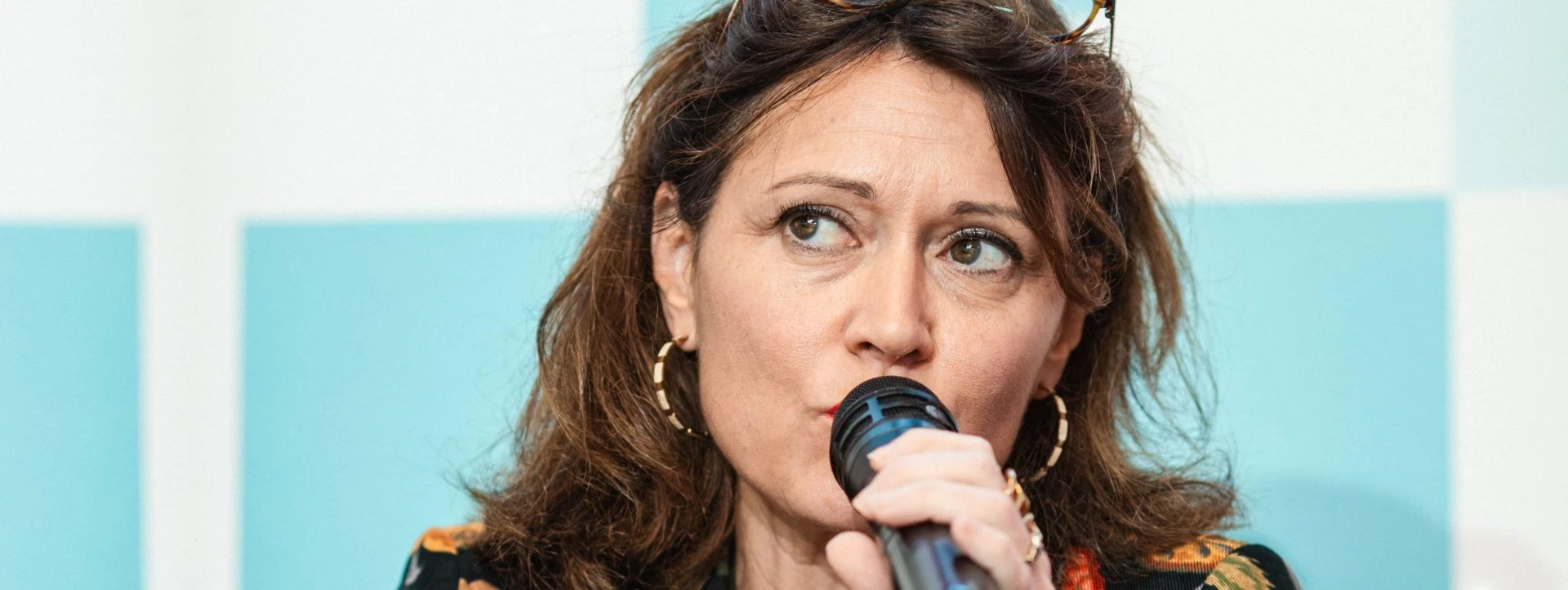
Climate change, insecurity, the digital revolution: young people are growing up in a world full of uncertainty. It’s very tempting for adults - whether at home, at school, or in the workplace - to make decisions for them. But Elsa Da Costa, Managing Director of Ashoka France, says it is time to stop seeing them as mere beneficiaries and to help them become real changemakers.
Making room for young people is first and foremost a matter of intergenerational dialogue.
Elsa Da Costa Managing Director, Ashoka France
What place do young people have in French society today?
When we look at the high school student protests, we see a strong signal of a desire for change. The place society gives young people today does not suit them.
In France, our educational system is still very top-down and leaves no room for young people to speak up for themselves even in the very places where they interact with adults. I have documented this gap, which I call the "dichotomy of needs." It shows up at every stage of their lives. Families focus on protecting them, while young people also need guidance. Schools instruct them, while they need to learn and to take ownership of their learning. Companies try to pigeonhole them, whereas they want to broaden their experiences. Society demands that they be responsible without giving them a voice.
We see this in the media as well. At Ashoka, we monitor 60 media outlet’s Instagram accounts. The results show that young people feature in only 9% of content, even though they make up 30% of the population, and that 40% of those stories are about crime or court cases. What comes through is a patronizing narrative: young people's views are dismissed on the pretext that they lack experience. This keeps one generation in a position of dominance over another.
This attitude can also be explained by adults' very real concerns for their children: the fear that knowledge will become obsolete in the face of AI, the risk of downward social mobility, growing precariousness (at Restos du Cœur, half of the recipients are under 25), eco-anxiety, and the impact of social media. All of these weigh on young people's mental health. But these worries should not lead us to think for them. We should be wary of our good intentions: they often reflect very personal fears that we project onto the next generation. This pessimism keeps us from giving them the means to empower themselves.
What we see is that young people aren’t rejecting school: they still believe in it, and that’s why they’re calling for it to change. They’re asking to be heard when decisions are made and to have a say in the process. Ultimately, making room for young people is first and foremost a matter of intergenerational dialogue and mediation. It requires adults to step back a little from their own path to understand someone else's.
How does Ashoka foster this dialogue and help young people's voices be heard?
If we want young people’s voices to matter, we must create spaces where they truly influence decisions. This is what we try to do at every stage of their journey, from school to the workplace. Take schools, for example: in France, 1 million class representatives are elected each year. This is a huge force, but it goes unrecognized. Giving these representatives real status and scaling up participatory budgeting would help establish an ongoing dialogue within schools.
In the business world, we took inspiration from a project that pairs young people with members of parliament. Our "shadow cabinets" bring together committees of 18-to-25-year-olds and corporate foundations to discuss the foundations’ investment strategies. Ashoka acts as a trusted third party: we make the connection at first, then step aside. Prejudices fall away on both sides, and trust is built.
At the grandes écoles, France's elite higher education institutions, student loans are the main reason graduates turn away from careers in the social sector. We are exploring a public-interest track: covering tuition fees for young people who commit the first three years of their careers to a public-interest organization. The goal is to enable more young voices to be heard and to participate in public-interest projects - especially those that directly affect them.
What does the Unlock Education program bring?
Equal opportunity is at the heart of Unlock Education, a three-year program that the AXA Foundation for Human Progress has supported for more than a year.
Part of the anxiety young people feel comes from a sense that they have no control over the future. That is why Unlock Education goes beyond passing on knowledge: the program helps young people develop the skills that enable them to take action, collaborate and plan for the future.
We support social entrepreneurs who work on "educations," in the plural: combating misinformation in schools; providing tailored mentoring that acknowledges young people’s challenges without ever downplaying them; and developing psychosocial skills such as self-confidence, cooperation, and empathy—all of which are essential for living together. They work with young people and with the wider educational community. I truly believe that nonprofits can bring schools what teachers have neither the time nor the mandate to provide.
Unlock Education launched in France, Belgium and Türkiye and will expand to new countries each year, with the involvement of AXA employees. It will build a community of social entrepreneurs committed to education as a driver of social cohesion.
Interview by the Les Carnets editorial team
Keep reading