- Santé
-
Pollution
Biodiversité marine
Prévention & Médecine de précision
Plastiques
Qualité de l'eau
Polluants toxiques & Substances dangereuses
Services écosystémiques
Biodiversité terrestre
Post-Doctoral Fellowships
Finland
Mieux identifier et atténuer les menaces des microplastiques pour préserver les écosystèmes et protéger la santé humaine
Bien que le plastique se soit avéré toxique et nocif pour la planète et la santé humaine, sa production atteint des niveaux records. La production et la consommation de plastique génèrent une quantité importante de déchets et de particules dangereux. Ces substances finissent la plupart du temps dans la nature, impactant ainsi non seulement nos écosystèmes, y compris la biodiversité marine et terrestre, mais aussi notre santé par leur présence dans l’air.
Freshwaters and coastal environments are among the most affected aquatic areas as a result of human activity. The greatest risk for aquatic ecosystems and human health is related to microplastics i.e., plastic materials with particle size less than 5mm. Microplastics are either manufactured to be used in cosmetics or plastic industries or formed following the degradation of plastic materials (due to UV radiation and physical abrasion). With serious gaps lying in recycling systems across the globe, more microplastics keep on infecting our environment. Recognized as emerging pollutants, their repercussions on ecosystems and human health are currently being investigated using various methods across disciplines.
Existing laboratory tools and current techniques allow us to test plastic’s impact on species, human beings’ guts, and tissues. Still, microplastics’ toxicity and harmfulness depend on exposure and their concentration in nature. High concentrations of microplastics can weaken ecosystems’ functionality, harm human health, and disrupt a variety of businesses including fishing, farming, and water production which constitute vital sources of revenue for different communities. However, very little is known regarding microplastic concentrations’ harmful levels.
During her AXA Fellowship at the University of Turku, Dr. Saija Saarni intends to reduce the knowledge gap on microplastics’ toxicity and harmfulness. She aims at providing evidence-based estimations geared toward identifying the chemical reactions arising from microplastics and natural sediments’ interactions to assess future risks and environmental impacts. Her strong interest and background in geology combined with her different works on microplastics provided her with the required knowledge, skills, and competencies to successfully carry out this proposal.
As part of her research project, Dr. Saija Saarni will conduct sedimentological, microplastic, and chemical analyses using laminated (varved) sediment archives. She will focus the analyses on both Kallavesi lake and Haukivesi lake, two highly polluted Finnish lakes located near industrial areas. These various approaches will enable her to measure environmental parameters’ evolution over time as well as the speed at which these changes occur, and, ultimately, identify future risks.
The outcomes of this research project are expected to help, on the one hand, authorities and policymakers adopt adequate regulatory measures to better identify and mitigate the risks associated with these substances and on the other hand, help insurers further assess and predict the risks arising from microplastics.
By taking an in-depth look at microplastics’ risks, Dr. Saija Saarni’s project promises to provide precious outputs to help ensure access to safe and clean water which is essential to the survival of all living things - plants, animals, and human beings as well as to functioning of the different ecosystems.
May 2022
Expected start date: Fall 2022
Watch Dr. Saija Saarni pitch her research project in 3 minutes
Learn more about the AXA Fellowships in Harmful Substances

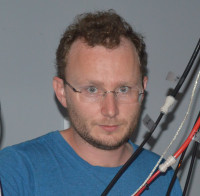
Saija
SAARNI
Institution
University of Turku
Pays
Finland
Nationalité
Finnish
Publications associées
Santé mentale & Neurologie
Prévention & Médecine de précision
Maladie d'Alzheimer, démences & maladies neurodégénératives
Diagnostic & Imagerie
Mécanismes cérébraux & Psychologie
France
Maladie d’Alzheimer : repousser la frontière de la neuroimagerie in vivo
Lire la suite
Stéphane
BANCELIN
Université de Bordeaux